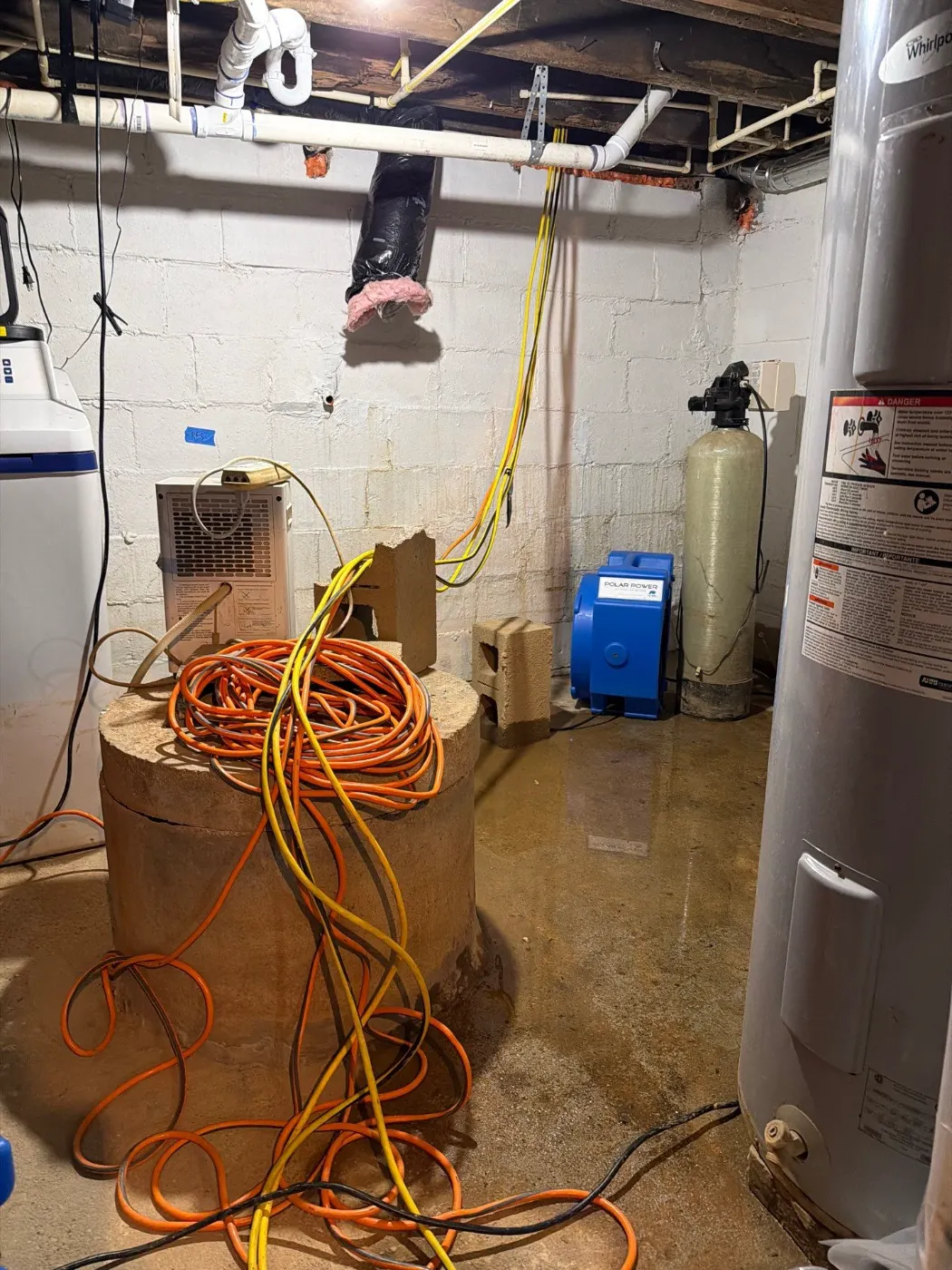
Commercial Water Restoration in Valley Mills, IN
Commercial water restoration serving Valley Mills and Marion County around the clock, done to the IICRC S500.
Commercial Water Restoration in Valley Mills, IN starts with one call to Valley Mills Water Restoration: live 24/7 dispatch, IICRC certified response, and honest written scopes before work begins. Call (317) 653-6821.
- Service: Commercial Water Restoration for Valley Mills homeowners
- Service area: Valley Mills, IN and surrounding areas
- Response time: Around the clock dispatch; Valley Mills emergencies move to the front of the line
- Licensed and insured (License #RC21100059)
- Serving Valley Mills, IN since 2018
Commercial Water Damage Restoration in Valley Mills
We handle commercial water damage restoration throughout Valley Mills, and we'll stay on it from the first walkthrough to the final moisture readings.
Site Conditions
Freeze and thaw cycles each winter can burst pipes in unheated parts of a commercial building. Your building's own drains and roof get checked on the first walkthrough with whoever manages the property.
We cover commercial properties across Valley Mills, including the area around the Kentucky Avenue shopping corridor. We also handle commercial water losses in Ameriplex, Southern Dunes, Camby and West Newton.
Commercial Water Restoration for Valley Mills Businesses
Carpet that squishes underfoot in the fellowship hall on a Monday morning leaves a congregation with a calendar problem, because Sunday's service and the weekday preschool both need rooms that aren't dry yet. Valley Mills Water Restoration works with church staff and trustees in Valley Mills to dry the sanctuary and classrooms in zones, so the rooms your schedule depends on get attention first.
Valley Mills Water Restoration handles the rebuild once the readings clear, from gypsum board and ceiling tile to flooring and paint. The rebuild scope comes from the same documentation that drove the tear out, so what goes back in your Valley Mills building matches what came out. You approve it in writing, and it can run in phases so tenants get their space back sooner.
Condensate and chilled water leaks in Valley Mills buildings often start at the air handler, so the drying plan starts there too. Your HVAC contractor clears the drain line and cleans the pan, and the crew dries the ceiling cavity and the insulation around it. The system stays off in the affected zone until the readings come down.
Coverage depends on your policy and on the cause, and your broker is the one to read the form with you. Valley Mills Water Restoration documents the cause, the timeline and the scope on your Valley Mills property, so the facts are in place when you and your broker talk with the carrier. The coverage decision stays with them, and the documentation stays with you.
One call starts the mitigation and the documentation on your Valley Mills property. Valley Mills Water Restoration dispatches to commercial water losses within 2 hours, dries to documented readings and can handle the rebuild of what came out. Ask for the vendor packet and the team sends it before the crew arrives.
Signs You Need Commercial Water Restoration
If you notice any of these in your Valley Mills building, schedule a free inspection before the issue worsens.
Rust staining at the base of steel studs, shelving uprights or racking posts
Musty odor at a return air grille that gets stronger when the HVAC runs
Flush valve running over a weekend with water seeping into the hallway carpet
Paint bubbling or peeling on a corridor wall just above the cove base
Carpet seams darkening along a corridor even though the surface feels dry
Vinyl wallcovering seams curling or bubbling on an interior partition wall
Water pooling at the base of an interior column or along a demountable partition track
Water spreading from a laundry room or mailroom door into the common corridor
The tenant below reporting drips from light fixtures or air diffusers in their suite
White chalky deposits appearing on a block wall or along a slab control joint
How Valley Mills Water Restoration Handles Commercial Water Restoration
We follow these steps in order on every Valley Mills job.
Source Shutoff and Water Category
The engineer or the trade that owns the failed line closes it off, and the crew photographs the failure point and notes what kind of water came out of it. That category call sets how each wet material gets handled.
Power and Panel Check
Before equipment goes in, your electrician deenergizes circuits that serve wet areas, and the crew checks outlets and floor boxes for moisture. Drying equipment then runs on protected circuits with the load spread across panels.
Structural Drying Design
Dehumidification gets sized from affected cubic footage and material porosity, with dry air ducted into ceiling plenums, wall cavities and shafts. Air movers get placed to keep surface air moving, and the calculation gets revised as readings change.
Equipment Placement and Circuits
Air movers and dehumidifiers go where the drying calculation puts them, with ducting routed into plenums and shafts. The crew confirms what each circuit can carry and routes cords overhead or along walls to keep exits clear.
Reconstruction and Reoccupancy
Flooring, gypsum board, ceiling tile, grid, millwork and paint go back once the readings clear. Slabs get verified with in situ probes before new glue down flooring covers them, and the space gets walked with you before handover.
Commercial Water Restoration in Valley Mills
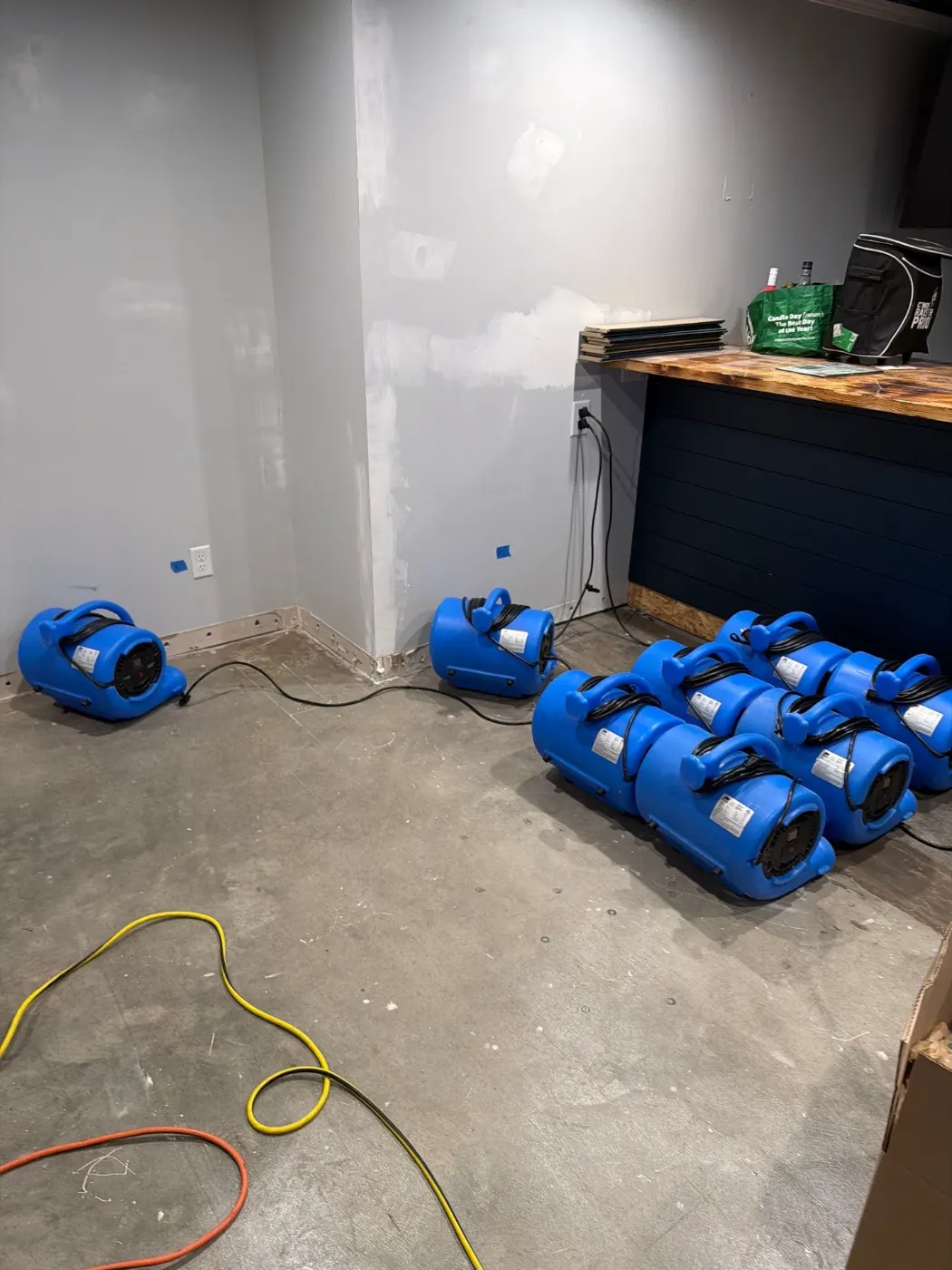
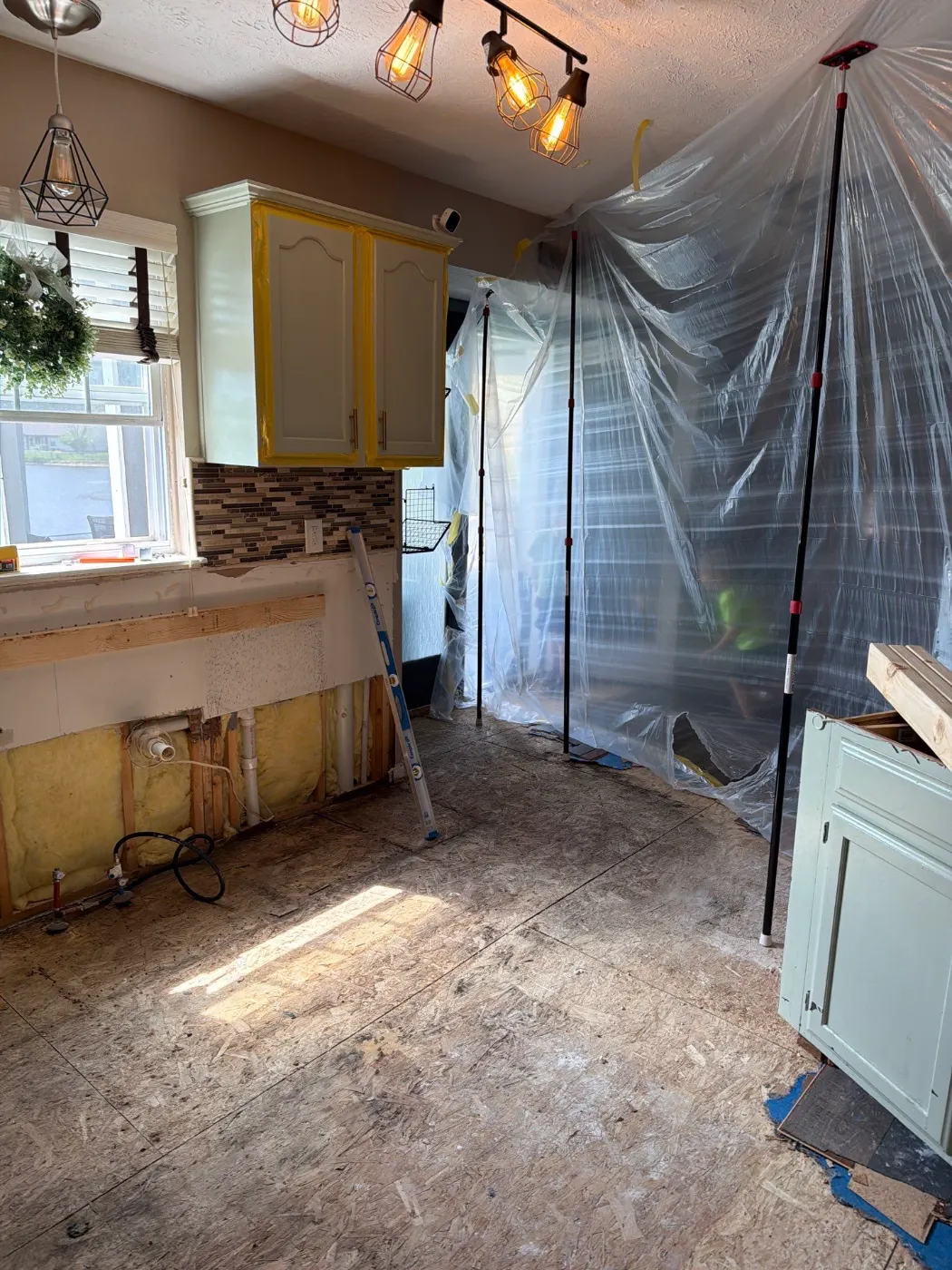
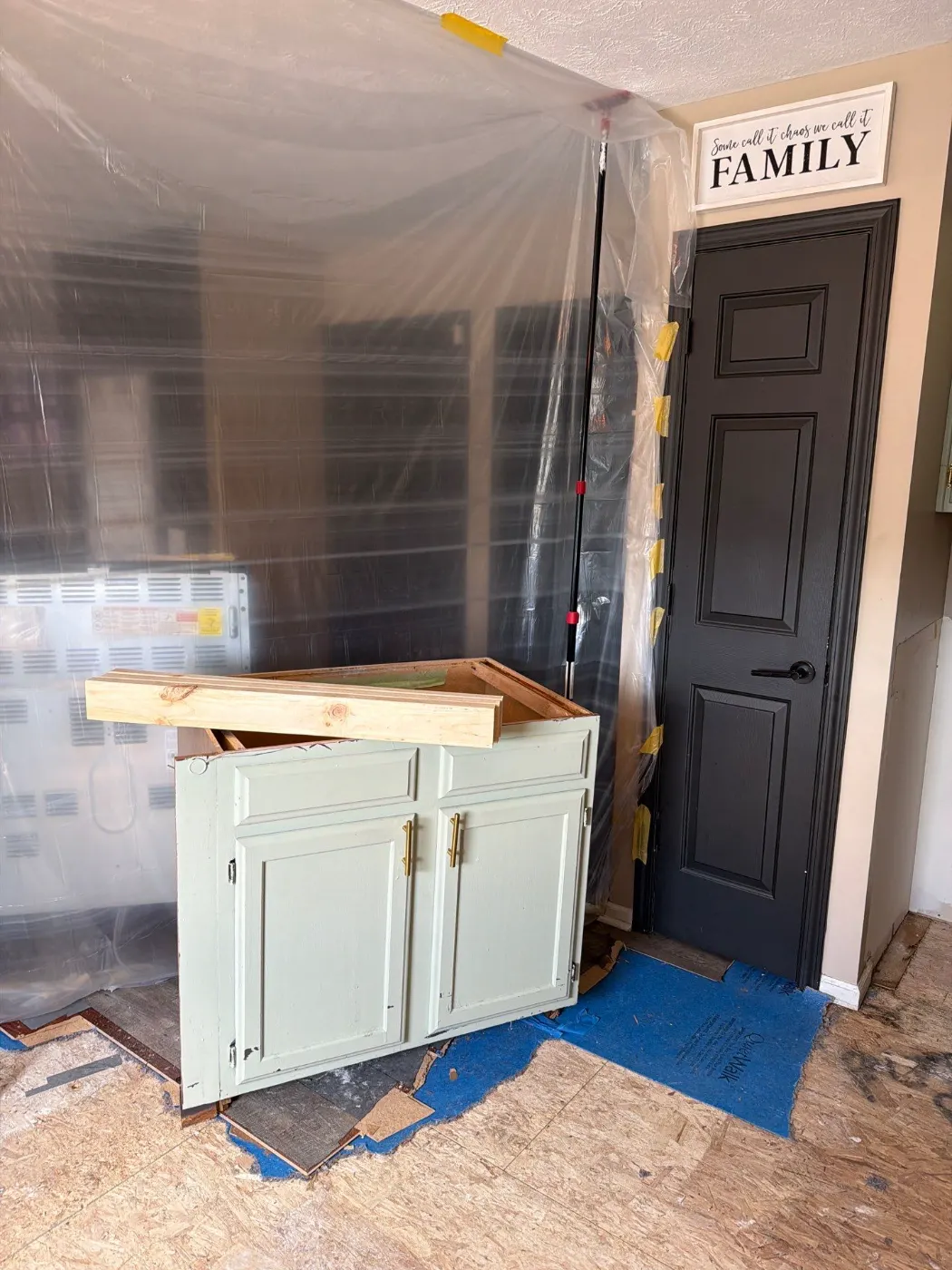
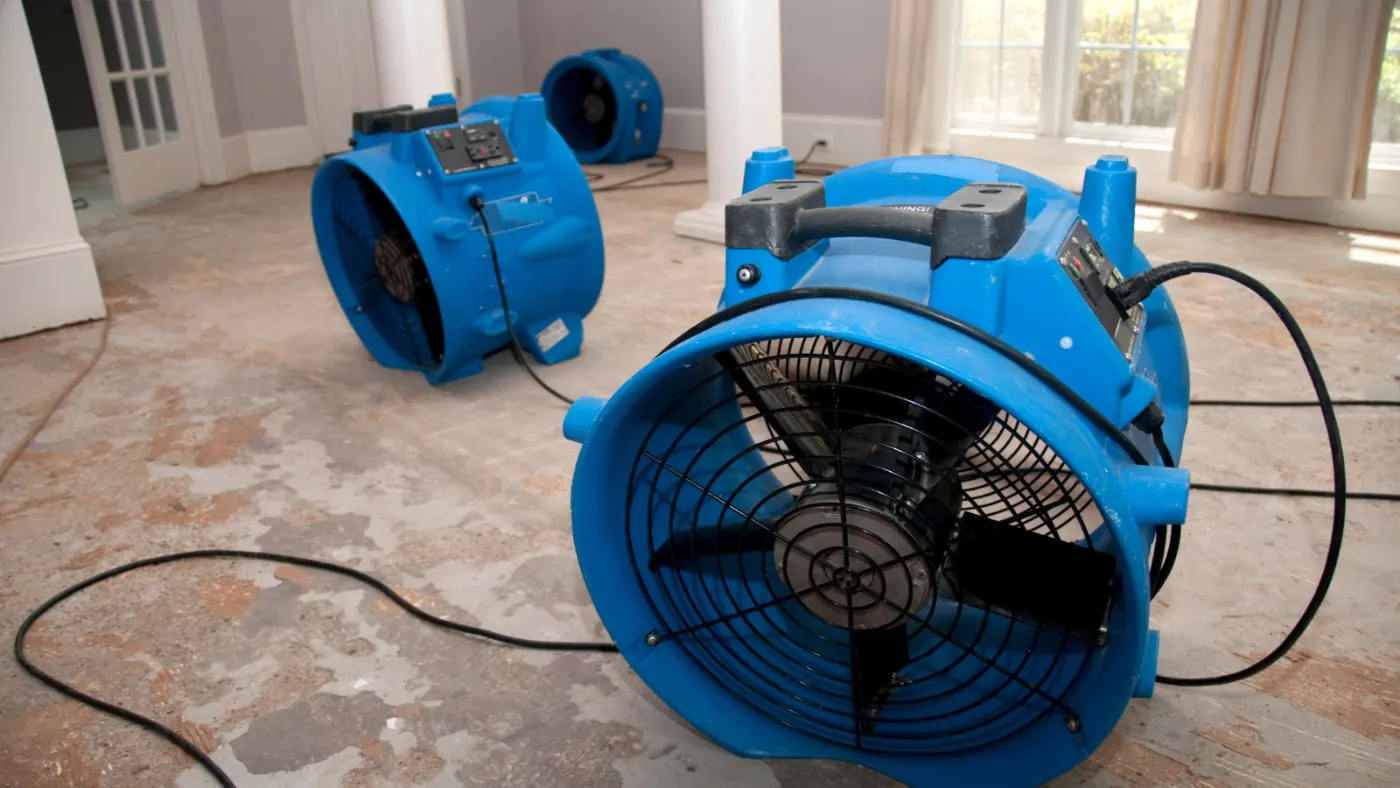
Photographs from real commercial water restoration jobs completed by our crew in Valley Mills and surrounding areas.
Commercial Water Restoration FAQ
Questions Valley Mills property managers ask us about commercial water restoration.
Guidance and Standards for Commercial Water Restoration
- The ANSI/IICRC S500 is the published standard for professional water damage restoration. The current edition is the Fifth Edition, 2021. IICRC S500 Standard
- EPA advises drying water damaged areas and items within 24 to 48 hours to prevent mold growth. EPA: A Brief Guide to Mold, Moisture and Your Home
Valley Mills Neighborhoods We Serve
We take commercial water restoration calls in every part of Valley Mills. Pick your neighborhood for local details.
Other Restoration Services in Valley Mills
Valley Mills Water Restoration handles the full scope of restoration work. Explore our other services below.
Water Damage Restoration in Valley Mills
24/7 emergency response. IICRC certified water restoration from extraction to full dry out.
Learn more →Basement Flooding in Valley Mills
Basement water emergencies handled fast. Extraction, drying, mold prevention.
Learn more →Sewage Cleanup in Valley Mills
Category 3 biohazard cleanup. Full containment, decontamination, structural restoration.
Learn more →Request Commercial Water Restoration
Reach Us Directly
Our team is available 24/7 for emergencies and ready to schedule inspections during business hours.
Need Immediate Help?
For active water or mold emergencies, call us directly. We are available 24/7.