Sewage Cleanup in Valley Mills, IN
Category 3 cleanup in Valley Mills, planned from photographs and moisture readings you can look over yourself
Sewage Cleanup in Valley Mills, IN starts with one call to Valley Mills Water Restoration: live 24/7 dispatch, IICRC certified response, and honest written scopes before work begins. Call (317) 653-6821.
- Service: Sewage Cleanup for Valley Mills homeowners
- Service area: Valley Mills, IN and surrounding areas
- Response time: 24/7 answering with priority emergency dispatch across Valley Mills
- Licensed and insured (License #RC21100059)
- Serving Valley Mills, IN since 2018
Sewage Backup Cleanup in Valley Mills
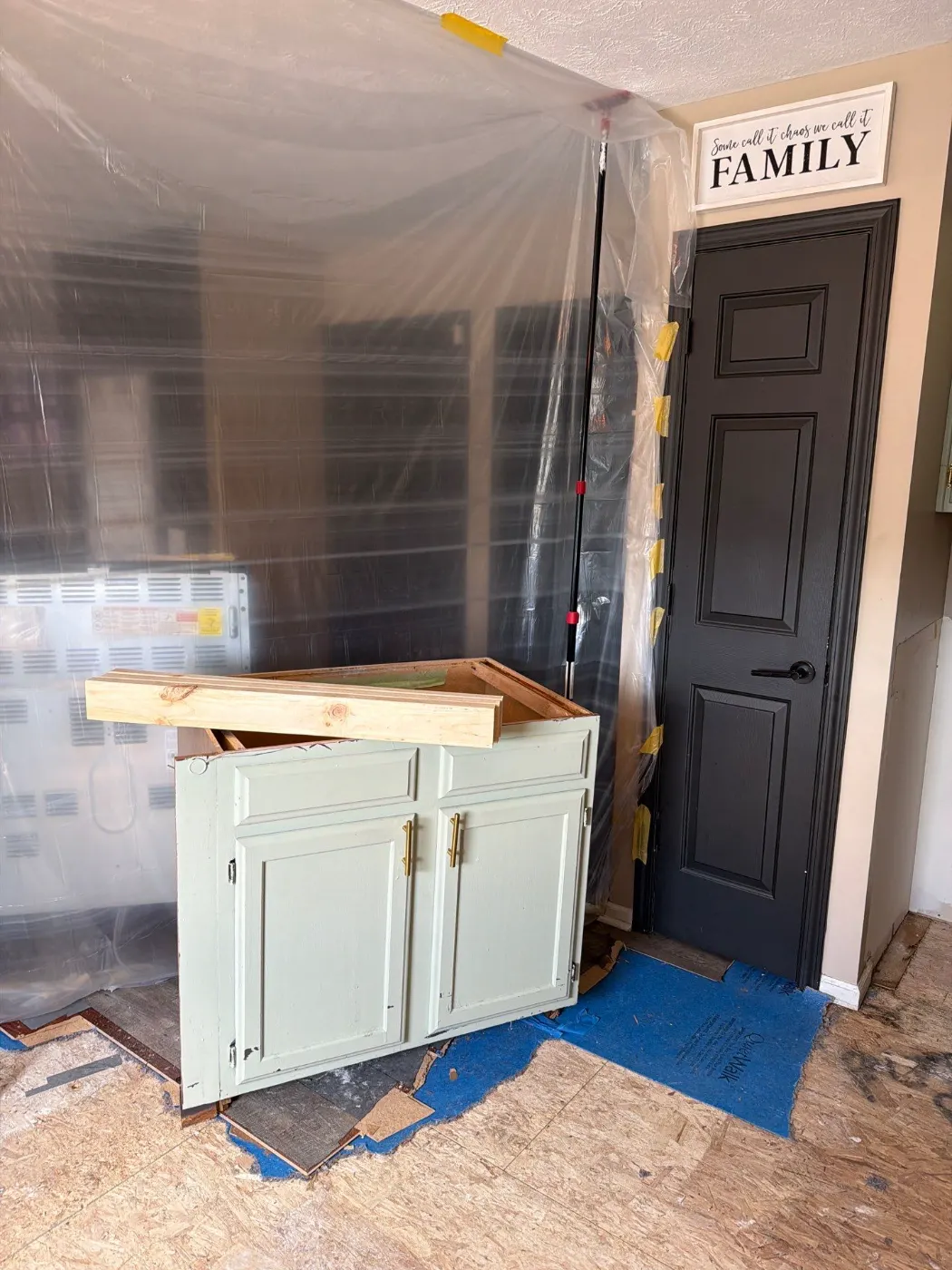
We handle sewage backup cleanup across Valley Mills at any hour, and we'll bring the containment and protective gear sewage calls for.
When Backups Happen
Heavy rain can overload the sewer lines here and push sewage back into basements.
We work in every corner of Valley Mills, including River Valley and the blocks around Southwestway Park and Winding River Golf Course. We also clean up sewage backups in Decatur Township, Ameriplex, Southern Dunes and Camby.
Expert Sewage Cleanup for Valley Mills Homeowners
Tree roots grow into clay and cast iron sewer lines at the joints. The backups they cause tend to come back until a plumber fixes the line itself. For the water already inside your Valley Mills home, Valley Mills Water Restoration dispatches a crew within 2 hours. The crew removes the soaked material under containment and photographs the source, so your file shows what happened and where it came in.
A sewage backup needs two trades, a plumber or drain contractor to clear the line and a restoration crew for the cleanup. Valley Mills Water Restoration works alongside whoever clears your line in Valley Mills and photographs the cause they find. If you don't have a drain contractor yet, the crew can tell you what to ask for, and the cleanup starts once the flow has stopped.
A technician comes back every 24 hours while equipment is running in Valley Mills. Moisture readings get taken at the same marked locations so the numbers compare day over day, air scrubber filters get checked, and equipment moves as the wet zone shrinks. If a reading says moisture is sitting somewhere the original scope missed, Valley Mills Water Restoration photographs it and documents the change before touching anything new.
When mold has already started in a wall cavity, the remediation follows the IICRC S520 and gets its own line on the scope. Valley Mills Water Restoration photographs the growth, notes the containment and HEPA filtration used and adds it to the photo report for your Valley Mills home. Policies handle mold in different ways, so check yours or ask your agent before you decide.
Call Valley Mills Water Restoration and a crew dispatches to your Valley Mills home within 2 hours. Containment and HEPA filtration come on the truck, and the scope you get separates what has to be removed from what gets cleaned and stays. The crew walks you through it before anything comes off the wall.
Signs You Need Sewage Cleanup
If you notice any of these in your Valley Mills home, schedule a free inspection before the issue worsens.
A tide line and staining on basement drywall a few inches above the floor
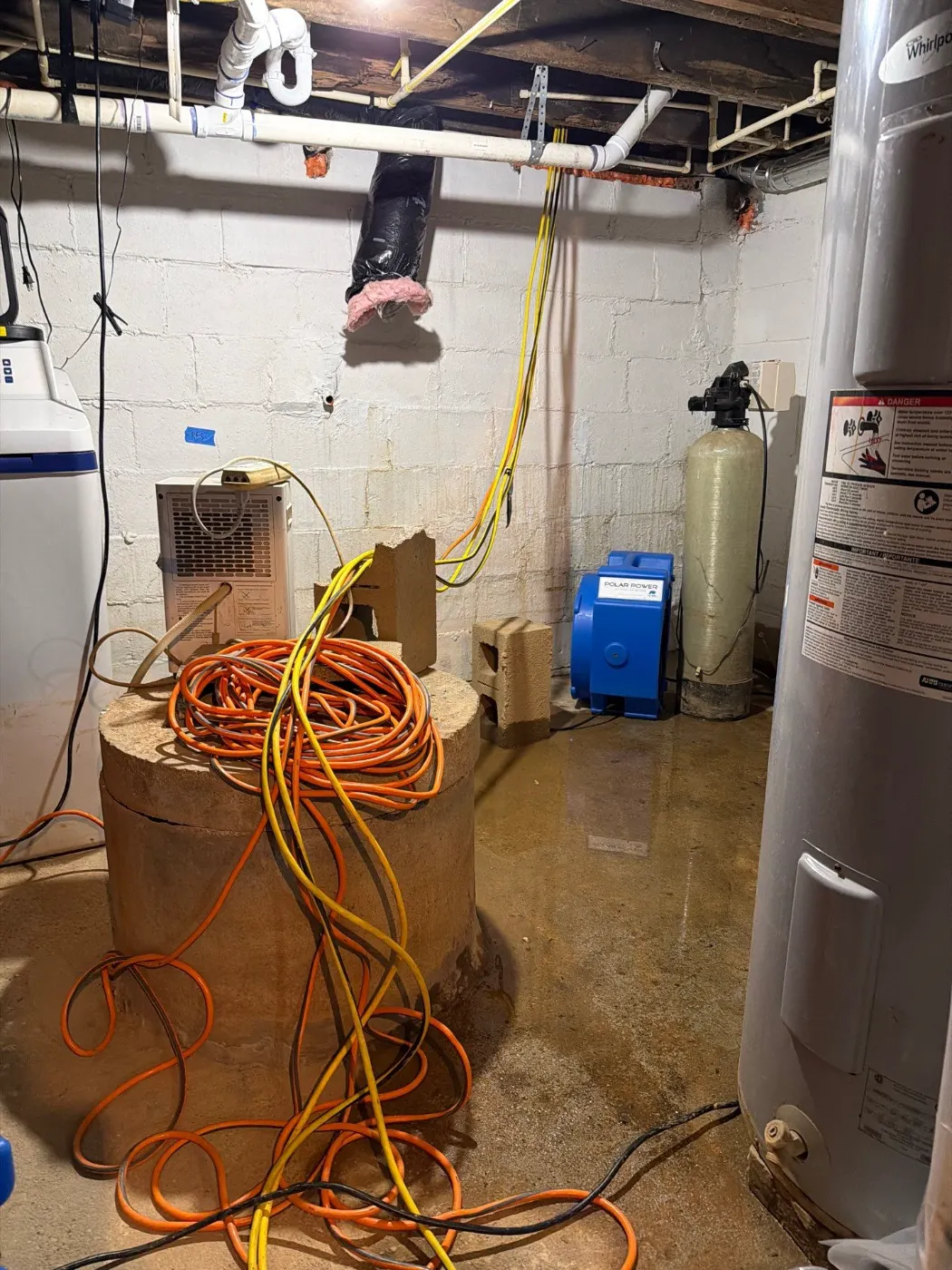
An extension cord or power strip sitting in standing water near the basement drain
Brown drips falling from a ceiling light fixture beneath an upstairs bathroom after an overflow
Bathroom vanity base swollen and stained after waste overflowed from the toilet
Wastewater rising in the basement shower stall whenever the washing machine pumps out
Sewage odor through the floor registers when the furnace or air conditioner kicks on
Dirty water showing up inside the washing machine drum between loads
Waste from an overflowing toilet running out the bathroom door and into the hallway carpet
An upholstered chair or mattress in the basement wet at the legs after a backup
Baseboard swelling and paint blistering in a band a few inches above the slab
How Valley Mills Water Restoration Handles Sewage Cleanup
We follow these steps in order on every Valley Mills job.
Porous Material Removal
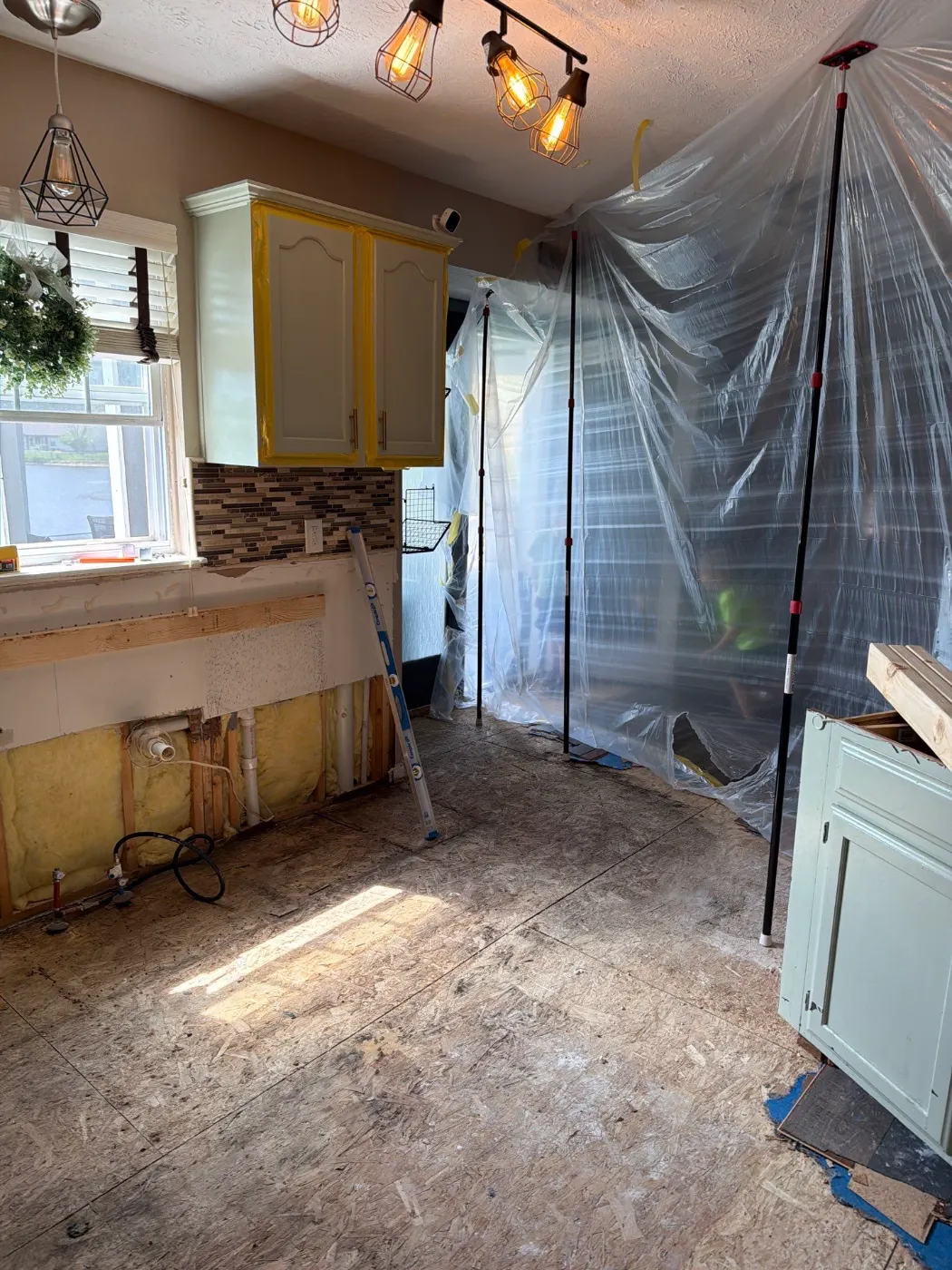
Carpet cushion, wet insulation, baseboard and drywall above the moisture line come out and get bagged for disposal, with an inventory photographed for the claim. The cut height sits where meter readings justify it, usually a foot or two above the staining.
Hard Surface Decontamination
Exposed framing, subfloor, slab and joists get scrubbed and rinsed, and the rinse water gets extracted. An EPA registered antimicrobial goes on once the surfaces are clean and stays wet for the dwell time printed on the product label.
Drain and Pit Cleaning
Source points such as the floor drain and any ejector pit get scrubbed and disinfected after the main surfaces, since residue collects where the water came out. Photos before and after go into the job file.
Structural Drying
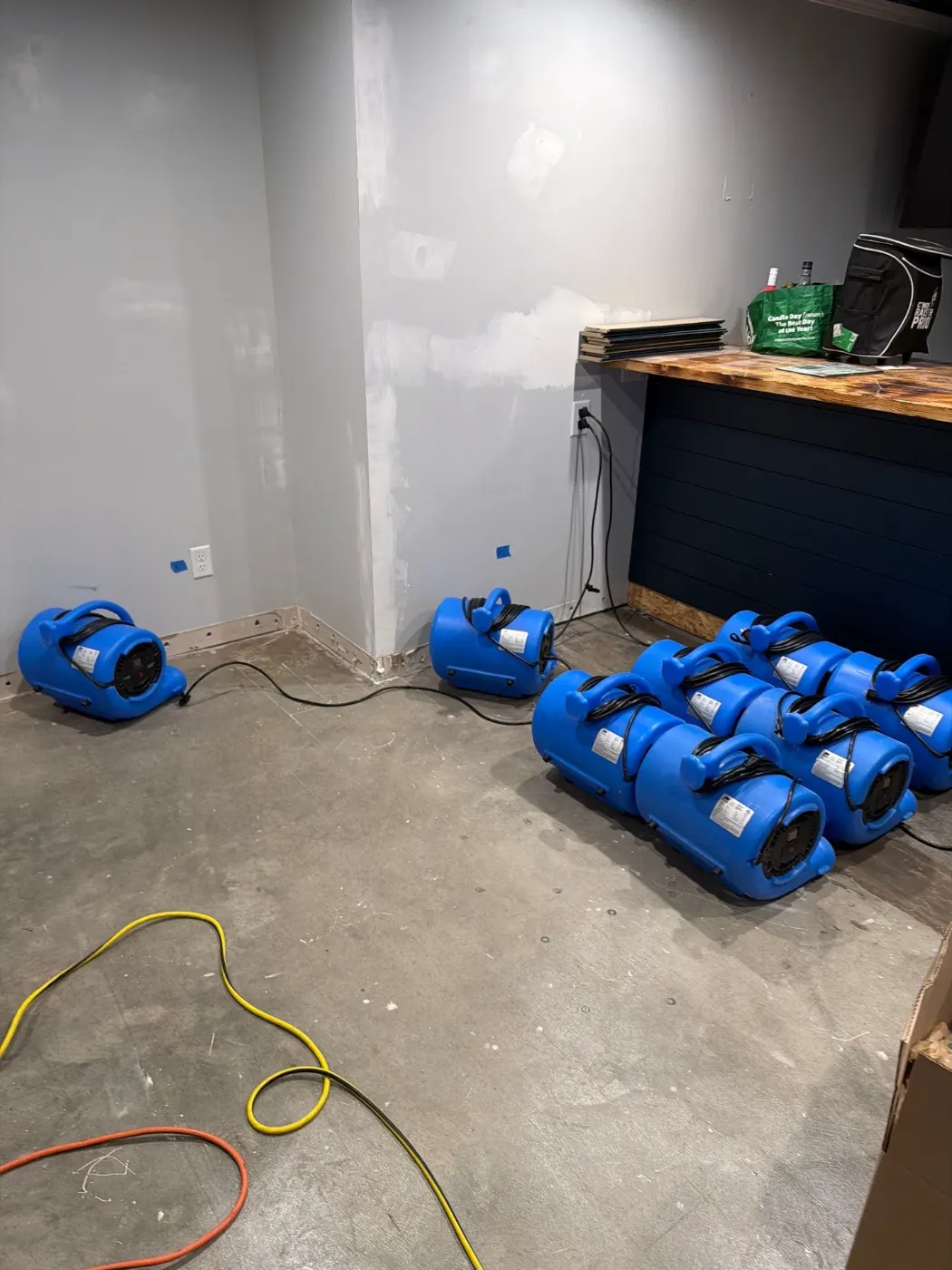
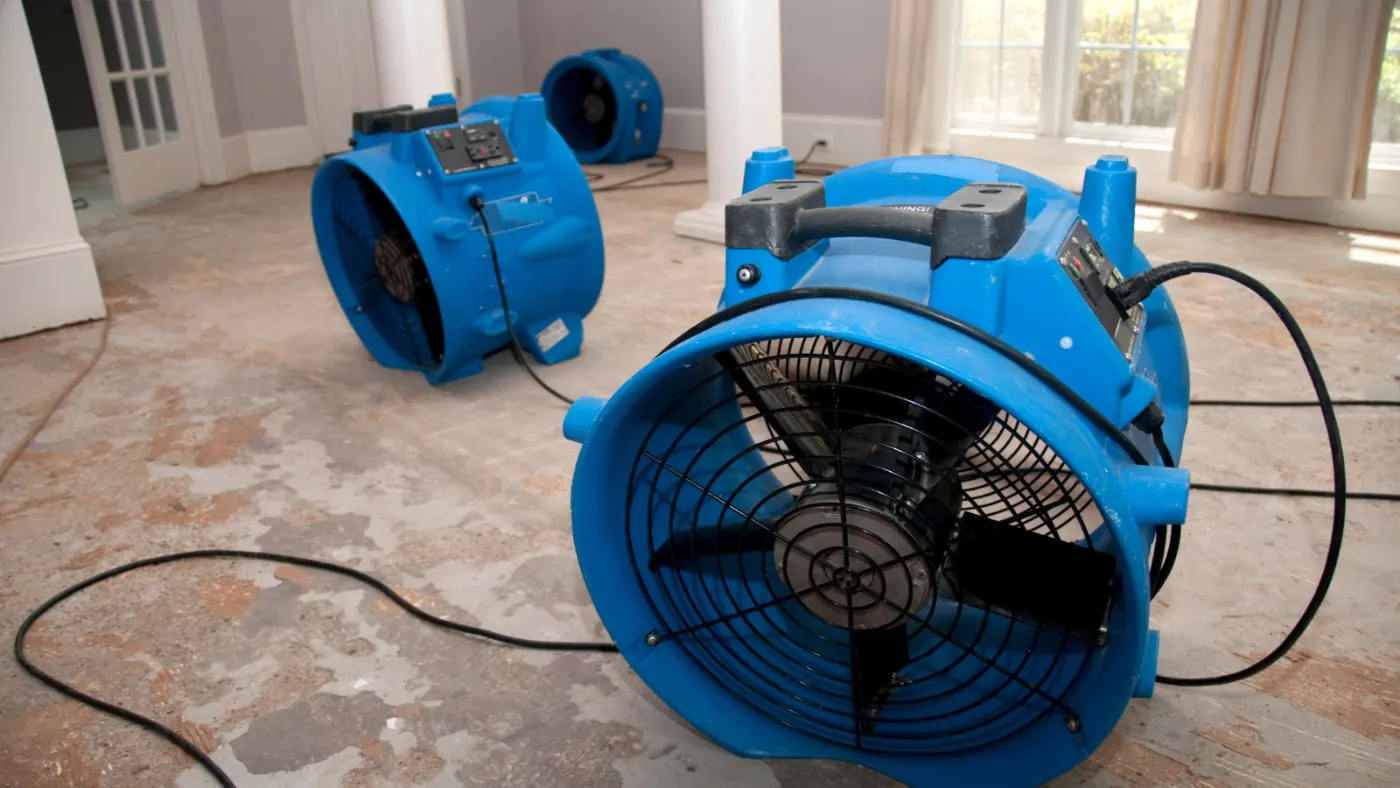
Commercial dehumidifiers sized to the affected cubic footage and air movers placed around the wet zone run until materials match unaffected baseline readings in the same house. Moisture readings get logged daily at marked locations while the equipment runs.
Rebuild and Handoff
Insulation, drywall, trim and flooring go back over a structure that's been cleaned, treated and verified dry. Valley Mills Water Restoration hands over the documentation package, including source photographs, the daily moisture log, the disposal inventory and the clearance readings.
Sewage Cleanup in Valley Mills
Photographs from real sewage cleanup jobs completed by our crew in Valley Mills and surrounding areas.
Sewage Cleanup FAQ
Questions Valley Mills homeowners ask us about sewage cleanup.
Guidance and Standards for Sewage Cleanup
- The ANSI/IICRC S500 is the published standard for professional water damage restoration. The current edition is the Fifth Edition, 2021. IICRC S500 Standard
- The Indiana Department of Insurance advises against permanent repairs before your insurance company inspects the damage. Check your own policy for what it covers. Indiana Department of Insurance: Insurance Claim Tips
Valley Mills Neighborhoods We Serve
We take sewage cleanup calls in every part of Valley Mills. Pick your neighborhood for local details.
Other Restoration Services in Valley Mills
Valley Mills Water Restoration handles the full scope of restoration work. Explore our other services below.
Water Damage Restoration in Valley Mills
24/7 emergency response. IICRC certified water restoration from extraction to full dry out.
Learn more →Basement Flooding in Valley Mills
Basement water emergencies handled fast. Extraction, drying, mold prevention.
Learn more →Storm Damage in Valley Mills
Storm related water emergencies. Tarping, extraction, drying, and full restoration.
Learn more →Request Sewage Cleanup
Reach Us Directly
Our team is available 24/7 for emergencies and ready to schedule inspections during business hours.
Need Immediate Help?
For active water or mold emergencies, call us directly. We are available 24/7.